12-Month Osteopathic & Visceral Manual Therapy Training

10 Two-Day Weekends
A year-long exploration of assessment, perception, anatomy, and whole-body treatment.
Begins April 2027
Small Cohort. Deep Immersion.
10 Spaces Left
Learn to Understand the Body as a Whole
The 12-Month Living Systems Approach to Manual Therapy is an immersive training for hands-on practitioners who want to develop greater clarity in assessment, treatment, and clinical decision-making.
Rather than learning a collection of techniques or following predetermined treatment sequences, you will develop a systematic way of listening to the body, identifying meaningful restrictions, and determining where treatment may be most useful.
Throughout the year, we explore the relationships between the musculoskeletal, visceral, nervous, vascular, and membranous systems while continually developing the perceptual skills needed to understand how these systems influence one another.
You will learn to assess locally and globally, distinguish between multiple areas of restriction, evaluate movement and function, and use gentle functional treatment methods that respond to what you find.
The goal is not simply to learn more techniques.
It is to develop a way of seeing, feeling, and thinking that can guide your hands throughout a treatment—and continue to shape your work throughout your career.
This training is for hands-on practitioners who want to deepen their ability to understand what they are feeling beneath their hands and make clearer decisions about where and how to work.
It may be especially valuable if you want to:
- Develop greater confidence in your assessment skills
- Understand how different areas and systems of the body influence one another
- Move beyond treating only where symptoms are presenting
- Refine your palpatory sensitivity and ability to distinguish layers of restriction
- Integrate assessment and treatment into a cohesive approach
- Work with greater precision while using less force
- Develop skills and principles that can be integrated into the work you already practice
About the Trainer, Michael Hahn
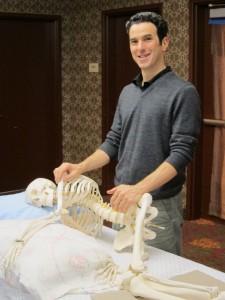
I have spent over 27 years in clinical practice and more than 20 years teaching advanced hands-on manual therapy to licensed practitioners. This work is rooted in deep anatomical inquiry and refined through decades of treating chronic pain, postural imbalance, and complex structural restrictions that often resist conventional approaches.
I have trained extensively in Structural Integration, Cranial Sacral Therapy, and osteopathic-influenced manual techniques, synthesizing these disciplines into a clear and clinically effective framework that prioritizes precise assessment and gentle correction. These classes are known for being anatomically rigorous, highly practical, and immediately applicable in real clinical settings. The work emphasizes structure before symptom, helping therapists feel where and why to work and how to trust their hands as reliable tools for change.
I am also known for helping therapists refine not just their technique, but their own posture, mechanics, and energetic presence — small adjustments that allow the work to go deeper without increasing force. I guide practitioners to think structurally, listen accurately, and work with confidence and clarity.
What peers and students say
“Michael Hahn possesses the rare gift of being both an outstanding practitioner and a gifted teacher. His year-long class is rich, thorough, and thoughtfully paced, and should appeal to those who desire to address the roots of their clients’ conditions. It challenges even the most experienced practitioners by presenting an approach to body work that is precise in its attention to deep anatomy, subtle in its techniques, and profoundly effective for clients.
Michael’s teaching style is organized but flexible with time for questions and individual attention. In this intimate class setting, Michael clearly presents material with visual graphics and hands on demonstrations. Unique to his format is the opportunity to watch him treat a client through a full session each weekend of the course. Watching Michael work is informative and inspiring, demonstrating the profound changes possible in a single session where the primary restrictions in the client’s body are addressed, rather than the symptoms.
More than any other, this class has enriched and altered my practice, informing my touch whether I am treating with visceral manipulation, integrating visceral manipulation into my session, or doing deep tissue massage. My understanding of anatomy is deeper, my touch more perceptive, and my clients’ results more potent. I strongly recommend Michael’s class to practitioners who wish to distinguish themselves by addressing their clients’ issues more effectively and directly.”
-Merey Grearson Olympia, WA
Introductory Classes:
- January 23, 2027
- Feb 20, 2027
- March 13, 2027
What to expect during the Introduction class:
- An overview of the work with demonstrations.
- To practice and experience the work and see how I present the material.
- Classes are 2 hours from 11:00-1:00
- No cost for the class
If you are traveling from out of town for an Intro class and would like to receive a session to get a deeper sense of the work, reach out to Michael to set that up.
Sessions are 1 hour. Investment: $200.00
Please call or email me to reserve a space and I will confirm your spot in the class.
541-241-7850 or
michaelmhahn@gmail.com
Location: 20230 Bronze Street Bend, OR 97703
Details about the training
Each weekend builds on the last so you don’t just collect techniques, you integrate them. As the year progresses, assessment, anatomy, perception, and treatment increasingly come together into a cohesive way of working.
Dates:
2027 April 10–11 / May 15–16 / June 12–13 / July 17–18 / Sept 25-26 / Oct 23-24 / Nov 13-14
2028 Jan 22-23 / Feb 12-13 / March 18-19
Hours:
Saturday & Sunday 9:00am – 5:00pm
Prerequisites:
A desire to work gently with low forces, experience with gentle touch therapies is beneficial but not necessary.
Application process:
Click the “Apply For the Training” link below and complete the application form, once received I will reach out to you to set a up a call.
If possible, I recommended that you receive a session from me to gain a deeper understanding of the work prior to enrolling in the training.
Class Investment:
Deposit of $700.00 due to reserve your space in the program. Ten additional payments of $600.00 due one week before each class 1 through 10. Total for the year is $6700, which equals $335.00 per day for 20 days.
For those with limited financial resources please reach out to discuss the potential of a sliding scale. There are a few of these spaces available in the training.
Payment options:
Venmo and Credit Cards.
10 spaces left
I keep this group small on purpose. You cannot develop refined hands in a crowded room.
If you feel that quiet “yes” while reading this… trust it.
Material covered each class
(The order in which the listed material will be taught is subject to change)
Class 1:
April 10–11, 2027
9:00am – 5:00pm
Overview
This opening weekend lays the foundation for the entire training. Students will learn the core assessment and treatment principles that guide the work, observe a full session, and begin supervised hands-on practice. Emphasis is placed on developing a clear clinical entry point, refining perception, and understanding how to integrate these principles into an existing practice.
Techniques Covered
You will learn General and Local Listening assessments, layered listening, and energetic muscle testing. These tools quickly identify the most productive areas to treat, removing guesswork from your sessions. The primary Functional Method introduced is “listen and follow,” combined with the concept of first barrier release.
Anatomy Covered
Foundational overview of the organs.
Class 2:
May 15-16, 2027
9:00am – 5:00pm
Overview:
This class introduces spinal and rib cage mechanics that help organize broader structural patterns throughout the body. Students will learn to assess and treat restrictions involving the dural tube, facet joints, and rib cage articulations while deepening their understanding of how these structures influence posture, breathing mechanics, and compensation patterns.
Techniques covered:
Continued review and deepening of assessment and treatment methods. Continued refinement of Functional Methods, including direction of effort and mixed-mode application depending on tissue response.
Anatomy covered:
Dural tube, facet joints, rib cage articulations, and the associated ligaments and membranes.
Class 3:
June 12–13, 2027
9:00am – 5:00pm
Overview:
This class builds on the foundational assessment work by applying it more specifically to the esophagus, stomach, and spleen. Students will review earlier material while learning how to assess and treat these structures and their ligamentous relationships with greater precision and confidence.
Techniques covered:
Review and deepening of assessment and treatment methods. Introduction to organ motility induction to support the inherent embryological movement pattern of an organ.
Anatomy covered:
Esophagus, stomach, spleen, and their attaching ligaments.
Class 4:
July 17–18, 2027
9:00am – 5:00pm
Overview:
This weekend expands into the upper abdominal relationships of the greater omentum, liver, and gallbladder, while also addressing hiatal mechanics. Students will continue integrating earlier material and develop more precision in assessing and treating interconnected visceral relationships.
Techniques covered:
Functional Method based on the concept of working with tissues in the direction of ease stopping at 1st barriers. Exploration of long levers and short levers.
Anatomy covered:
Review of the stomach and esophagus for hiatal work, plus greater omentum, liver, and gallbladder.
Class 5:
September 18–19, 2027
9:00am – 5:00pm
Overview:
This class focuses on the duodenum, small intestine, cecum, and digestive sphincters. Students will continue integrating prior material while learning how restrictions in these tissues can contribute to both local dysfunction and broader structural patterns.
Techniques covered:
Review and integration of Functional Methods. Working with direction of ease and effort in a mixed mode.
Anatomy covered:
Duodenum, small intestine, cecum, and digestive sphincter protocols.
Class 6:
October 23–24, 2027
9:00am – 5:00pm
Overview:
This class brings together key visceral relationships of the abdomen and thorax, focusing on the colon, heart, lungs, and mediastinum along with their supporting ligaments and membranes. This weekend focuses on visceral-thoracic integration and the relationship between breath, suspension systems, and whole-body organization.
Techniques covered:
Review and integration of Functional Methods. Introduction of centralizing technique.
Anatomy covered:
Ascending colon, transverse colon, descending colon, sigmoid colon, heart, mediastinum, lungs, and related ligaments and membranes.
Class 7:
November 13–14, 2027
9:00am – 5:00pm
Overview:
This class shifts into the pelvic bowl and retroperitoneal relationships, introducing the pelvic bones and ligaments along with the kidneys and ureters. Students will learn to recognize how pelvic structure and visceral suspension influence one another.
Techniques covered:
Review and integration of Functional Methods. Introduction of recoil technique for working with bones and other select areas.
Anatomy covered:
Bones of the pelvis, kidneys, ureters and their attaching ligaments and membranes.
Class 8:
January 22–23, 2028
9:00am – 5:00pm
Overview:
This class focuses on the deeper pelvic organs and their connective relationships. Students will learn treatment approaches for the bladder, rectum, ovaries, uterus, and prostate while continuing to integrate the assessment and treatment principles taught throughout the year.Techniques covered:
Review and integration of Functional Methods. We will focus on integration of all techniques learned to date.
Anatomy covered:
Bladder, ovaries, uterus, prostate and rectum along with their connecting ligaments and membranes.
Class 9:
February 12–13, 2028
9:00am – 5:00pm
Overview:
This class introduces direct work with the nervous system and its major pathways. Students will learn approaches for assessing and treating spinal nerves, nerve plexuses, the phrenic and vagus nerves, and nerves to the upper and lower extremities.
Techniques covered:
Review and integration of Functional Methods. Introduction to flossing, a technique well suited for working with nerves.
Anatomy covered:
Spinal nerves, nerve plexuses, nerves to extremities, phrenic and vagus nerves.
Class 10:
March 18–19, 2028
9:00am – 5:00pm
Overview:
The final class of the year focuses on the circulatory system and the major arterial pathways. Students will review and integrate the material learned throughout the program while developing treatment strategies for the arteries and their role in whole-body function.
Techniques covered:
Review and integration of Functional Methods using all techniques learned in varying combinations to treat the arteries.
Anatomy covered:
Aorta, carotid and vertebral arteries, femoral arteries and brachial arteries.
“I thought I knew deep tissue work but this class gave me another level of clarity and intention. The work is easy to deliver and has profound results.”
“The information is clear and concise. I appreciate Michael’s gentle nature and the way he encourages us to take our time with our clients.”
“The classes are very informative and easily digestible. I could use the information in my practice the next day.”
“This class offers massage therapists another way to think “outside the box”.”
“Michael’s enthusiasm was awesome, the information was presented clearly and his knowledge of anatomy was great.”
“The less I worked (forced) and the slower I went, the more dramatic the response. Now I can work until I’m 70!”